
Western North Carolina is one of the most beautiful places in the country to own a home. The mountains, the tree canopy, the mild summers — it’s a region people move to and never leave. But that same environment that makes it so livable has a way of being genuinely rough on roofs.
If you live in the Brevard, Hendersonville, or surrounding mountain area, here’s what your roof is dealing with year-round — and how to stay ahead of it.
1. Heavy Rainfall and Persistent Moisture
The Southern Appalachians are one of the wettest regions in the eastern United States. Brevard in particular is sometimes called the “Land of Waterfalls” — and that reputation is earned by the same rainfall that soaks into aging shingles and finds its way into the gaps around flashings and pipe boots.
Persistent moisture is the enemy of roofing materials. It accelerates the breakdown of asphalt, promotes the growth of moss and algae, and — if it gets past your shingles — damages decking, insulation, and interior framing.
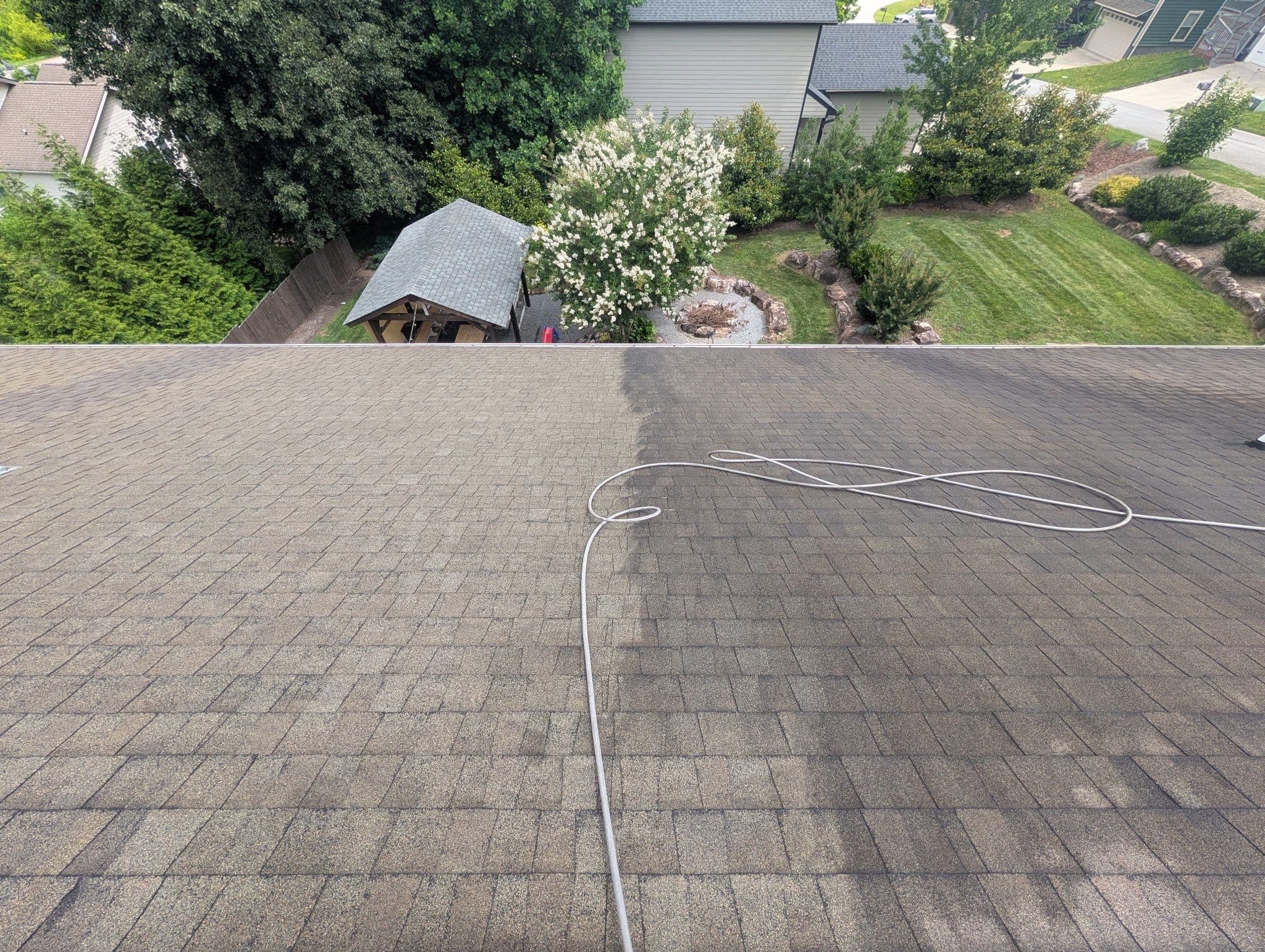
What to watch for: Dark streaks running down your roof are a telltale sign of algae growth. Moss will appear as a green, fuzzy layer, usually starting in shaded or north-facing sections. Both hold moisture against the shingle surface and shorten its lifespan significantly.
What helps: Regular roof cleaning removes biological growth before it can take hold. A professional soft-wash treatment — like our Roof Refresh service — safely removes moss, algae, and streaks without damaging the shingles.
2. The Freeze-Thaw Cycle
Anyone who’s spent a winter in the mountains knows how unpredictable temperatures can be. A 60-degree afternoon in February can be followed by a hard freeze overnight. That cycle is particularly damaging to asphalt shingles.
Here’s why: as shingles age and lose their natural oils, they become less flexible. When temperatures drop, brittle shingles contract — and when they warm back up, they expand. Repeat that process hundreds of times over multiple winters and you get cracking, curling, and eventually shingle failure.
Ice dams are another winter hazard. When heat escapes through a poorly insulated attic, it melts snow at the ridge of the roof. That water runs down and refreezes at the eaves, backing up under the shingles and forcing water into the home.
What helps: Keeping your attic well-insulated and ventilated reduces ice dam risk. Catching shingle degradation early — through an annual inspection — lets you address brittleness with a restoration treatment before cracks develop.
3. Tree Coverage and Debris
The mountain landscape means most homes sit under a significant tree canopy. That shade is welcome in the summer, but it comes with tradeoffs.
Overhanging branches deposit leaves, pine needles, and small debris on the roof surface. That organic material holds moisture, blocks drainage, and creates ideal conditions for moss and algae growth. In storms, branches can cause direct impact damage.
What helps: Keep gutters clean, especially in the fall. If branches are close enough to scrape the roof, trimming them back is a worthwhile investment. A quick visual inspection after major storms can catch impact damage before a small problem becomes a big one.
4. Wind Events and Storm Damage
Severe thunderstorms are common in summer, and the terrain can funnel wind in unexpected directions. Wind is one of the leading causes of shingle damage in the region — particularly along ridgelines and the edges of the roof where uplift forces are greatest.
Wind damage often looks like missing shingles, lifted tab edges, or cracked shingles. It can also compromise flashing around chimneys and skylights, creating entry points for water even when the shingles themselves look intact.
What helps: After any significant storm, a basic visual check from the ground can reveal obvious damage. Missing shingles should be addressed promptly — even a small gap can let water in during the next rain event.
Staying Ahead of It All
The common thread across all of these challenges is that early attention is dramatically cheaper than deferred maintenance. A roof inspection once a year — and after major weather events — puts you in a position to address small issues before they become expensive ones.
Bright Home Connections serves homeowners across Western NC and Upstate SC, offering roof cleaning, restoration, and replacement with honest assessments and no upselling. If you’re not sure what shape your roof is in, we’re glad to take a look.
Reach us at (828) 878-7663, email bill@brighthomeconnections.com, or find us Monday through Saturday, 8am–6pm.